Sustainability
The largest cut we make is the one we do not make. A garment that is never ordered is never dyed, sewn, packed, or shipped. Everything else on this page is smaller than that.
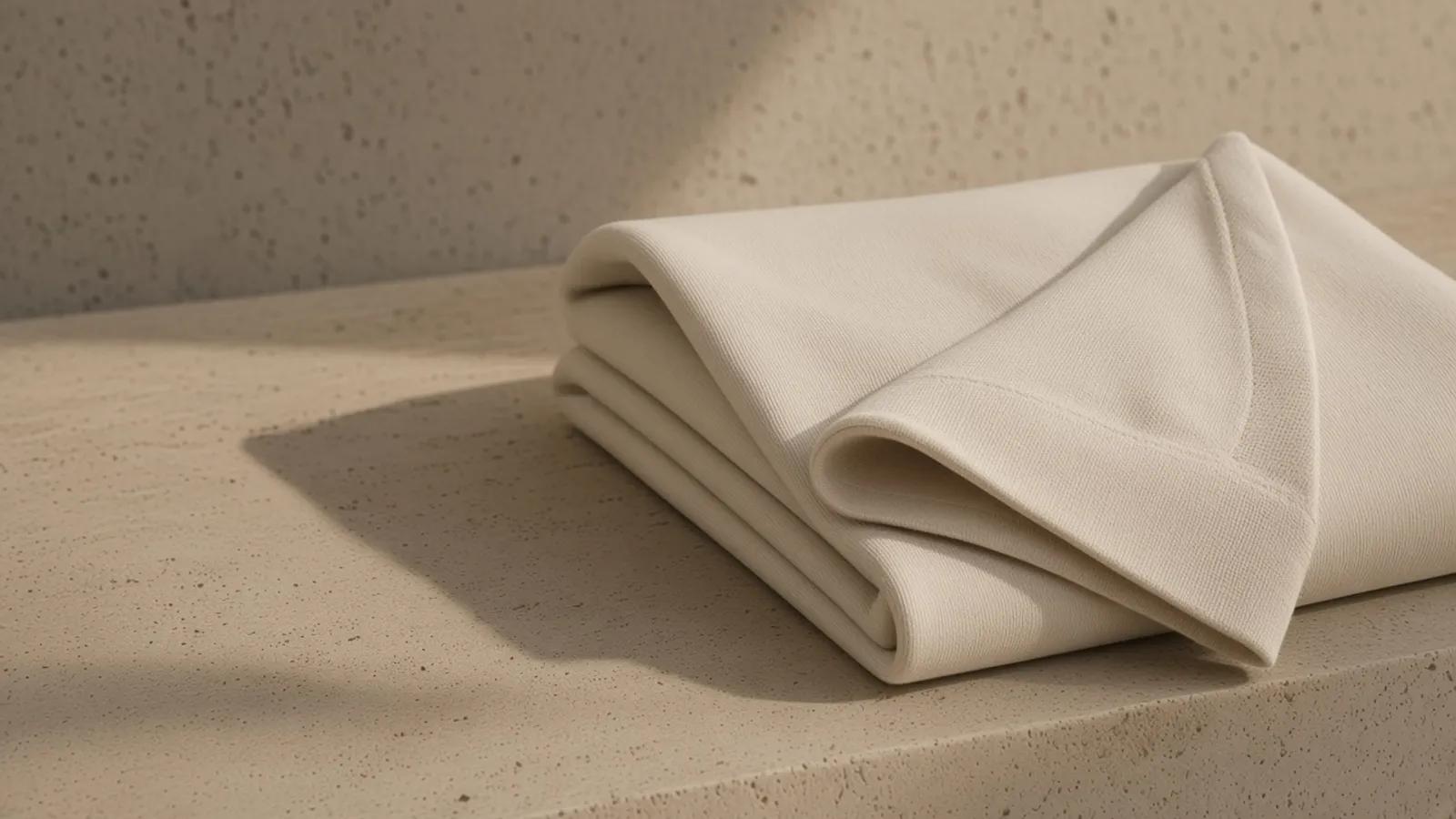
01Cloth, not a claim
The fibre is organic cotton: grown without the usual synthetic pesticides, then spun and knit to a midweight. Organic is a fact about the field. It is not, by itself, a softer hand. The hand comes from the loopback, the dye, and the wash.
We do not coat the cloth to fake a slide under the fingers, and we do not add a finish that has to announce itself. The test is the second week of wear.
02Dye in the size of the order
Colour goes on after the piece is sewn, in a bath mixed for the pieces that were ordered. Fewer navies asked for means fewer navies dyed. A colour does not get made so a warehouse has something to hold.
Garment-dyed cotton can ease a shade as it is washed. That ease is the fibre. A missed dye or a stain from the bath is a fault, and we repair, replace, or refund it.
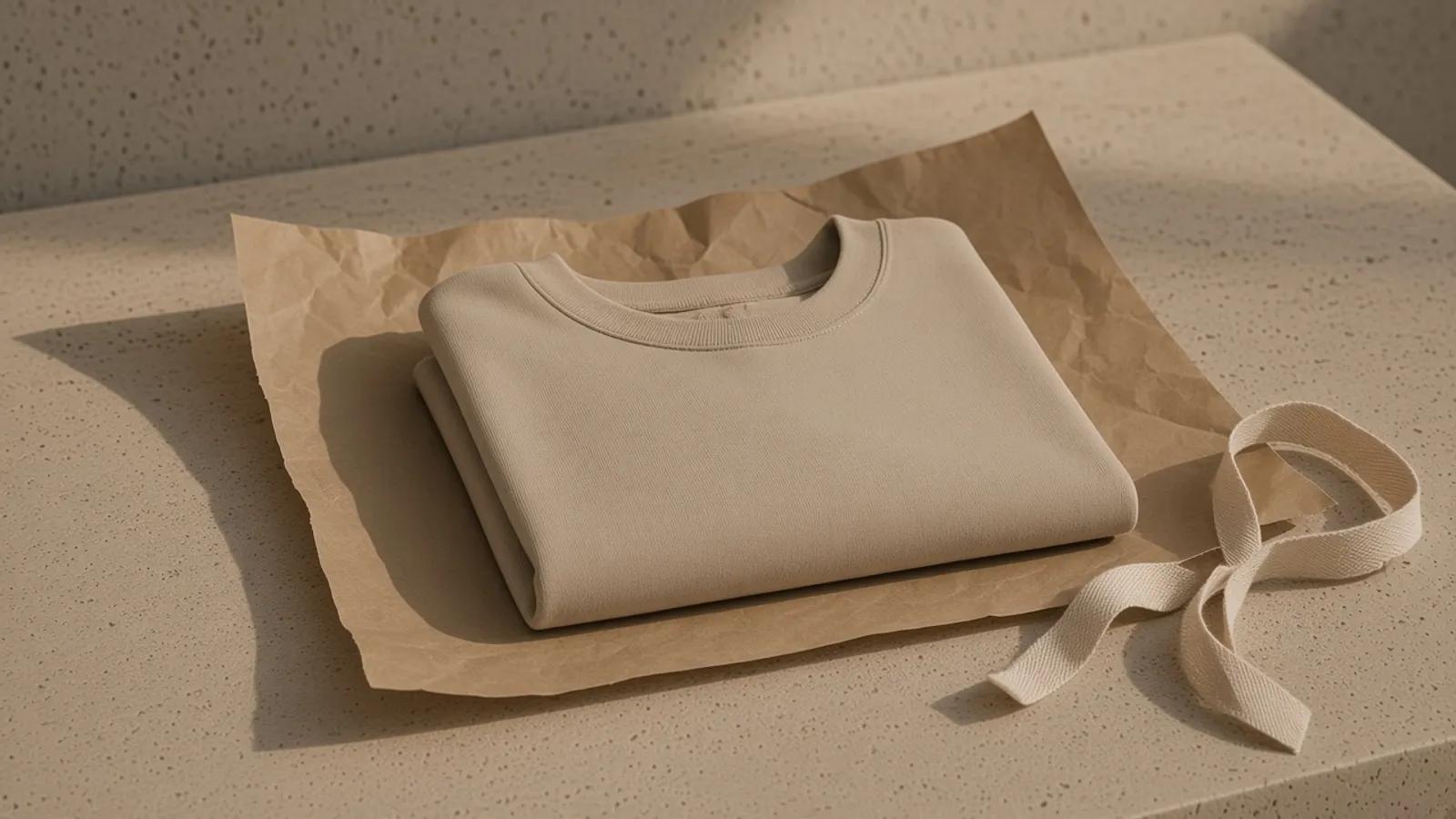
03The parcel
The piece leaves in plain kraft and a cotton tape. No printed season, no extra box inside the box. Recycled content is used where the mill already runs it. We do not add a layer of packaging so the unboxing can be photographed.
04What we will not pretend
Cotton uses water. A ship across Europe uses fuel. On-demand production removes the unsold pile. It does not make a sweatshirt weightless. We would rather describe the cut we refused than invent a number we cannot stand behind.
The workshops and the check after the seam are on manufacturing. How the order travels is on shipping and returns.