4 December 2025
Garment dyed, in small batches
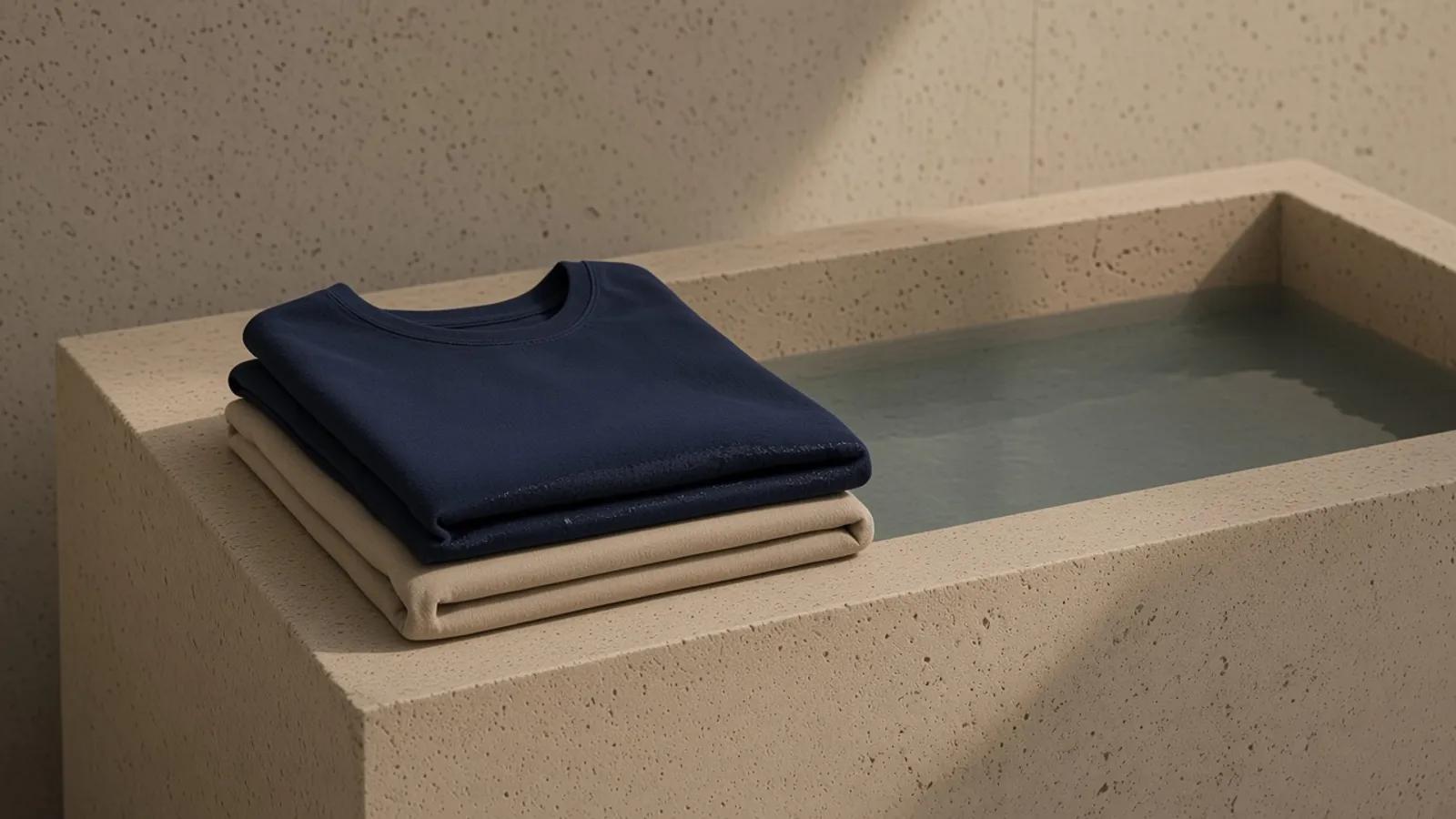
Colour is put on after the piece is sewn. The bath is sized to the order, not to a warehouse that has not been sold yet.
After the seam
Garment dye means the cotton is sewn in an undyed or prepared state, then coloured as a finished piece. The seam and the cloth take the dye together.
That is why a navy from one month and a navy from the next can be brothers rather than clones. Small lots move a little. We would rather admit the lot than chase a plastic match.
The size of a lot
A bath is mixed for the pieces that have been ordered, not for a colour story that has to fill a shop floor. If fewer navies were asked for, fewer navies are dyed.
Sand, ivory, stone, charcoal, navy: the set stays short on purpose. A new colour has to earn a bath. It does not arrive because a calendar said autumn.
Water and cloth
The piece comes out of the bath heavier with water, then it is dried and checked. A damp edge on a navy crewneck is the moment the colour is actually in the cotton, not printed on a swatch beside it.
We do not coat the cloth afterwards to force a showroom sheen. The colour is allowed to be cotton.
What changes with wear
Garment-dyed cotton can ease a shade as it is washed. That ease is the fibre, not a defect we pretend not to see. The shape is what we hold the workshop to.
If a piece arrives a different garment from the one on the page — wrong colour, missed dye, a stain from the bath — that is a fault. Write with photographs. We repair, replace, or refund.
Why bother with a bath
Piece-dyed cloth from a huge roll is consistent and anonymous. It is also how a colour gets made before anyone has asked for it. We already refused that for the cut. The dye follows the same rule.
The basin is not a mood. It is the step that keeps a colour from existing in a quantity nobody ordered.